
By VM7 Trial Analyst
Maputo — After four days before the Supreme Court, the prosecution against Venâncio Mondlane revealed a fundamental weakness: the State presented political speech as criminal evidence, but presented no evidence of a crime committed by the Accused.
Mr. Mondlane faces five charges — public apology for crime, incitement to collective disobedience, public instigation to commit a crime, instigation to terrorism and incitement to terrorism — carrying more than 20 years in prison. He denies all charges.
The case arises from the disputed presidential election of 9 October 2024, in which Mr. Mondlane contested the declared result on grounds of alleged electoral fraud.
Speech is not a weapon:
The Prosecution’s case rests largely on edited video excerpts and political slogans: Povo tomar poder, 4×4, Ponta de lança, Fase 4, olho por olho, tribunal do povo, blocked roads, toll gates.
Political speech is protected. It can never be treated as terrorism simply because the State dislikes it, fears it, or finds it inconvenient. The law protects vigorous, angry, even provocative political expression, because democracy cannot survive if opposition is criminalised.
Mr. Mondlane did not order an attack. He did not name a target. He did not indicate time, place or method for violence. He called for electoral truth, peaceful protest, singing the national anthem and banging pots. That is not incitement. That is opposition.
The Prosecution’s attempt to turn metaphor into murder, and rhetoric into terrorism, is not a legal argument. It is a political strategy to silence a voice the State could not defeat at the ballot box.
Context is a right, not a privilege:
On Day 4, the Public Prosecutor repeatedly sought to confine the Accused to yes or no answers.
That approach is incompatible with the right to a fair trial. An accused has the right to answer in full context, especially when the Prosecution relies on excerpts. The right to silence and the right not to self-incriminate do not include an obligation to accept a false framing of his own words.
When Mr. Mondlane asked for a video to be rewound one minute to restore context, the Prosecution instead played the full hour. That video put before the Court reports of killings, murders, kidnappings and torture allegedly committed by State security forces during the protests. The Prosecution then objected that the video was too long. The Court cannot exclude context when context destroys the prosecution.
The State cannot transfer its own responsibility:
The factual context cannot be ignored. According to figures invoked during proceedings, 411 people were killed and more than 3,000 detained after the electoral dispute, with others missing, tortured and injured.
Mr. Mondlane consistently referred to the murder of Elvino Dias, the attempt on his own life, and the killing, torture and arrest of protesters. His stated means of protest were his voice, his phone, singing the national anthem and banging pots.
Criminal liability is individual. The State cannot attribute to a single accused the acts of security forces, or the acts of thousands of protesters, without individualized proof. To do so violates the principle of personal culpability.
Equality of arms:
Procedural fairness was also in question.
On Day 2, the Prosecution challenged the legitimacy of defence lawyer, Advocate Shamir Mendes. On Day 4, the Court ruled he may remain to assist the defence, but may not address the Court directly, following a letter from the Bar Association.
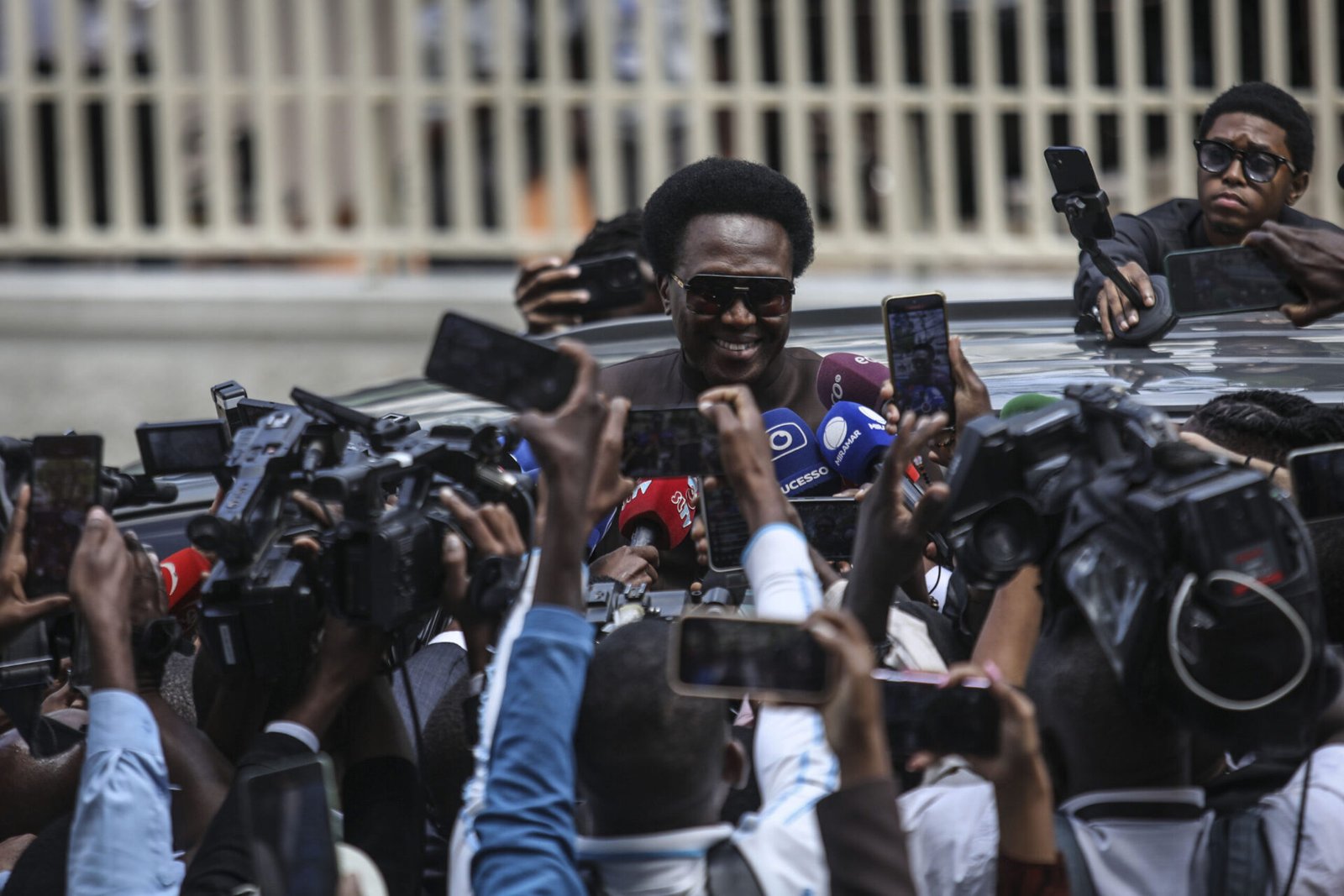
On the same day, the Prosecution sought to penalise Mr. Mondlane for speaking to the media after proceedings, invoking a six-month prison sentence for allegedly disrespecting State institutions. The Presiding Judge held that the Accused has the right to inform the public about what is happening in proceedings.
However, Prosecution interventions were allowed to proceed, while Defence interventions were treated with strictness. A Prosecution lawyer was observed gesturing and laughing during the Accused’s testimony, without admonition, although members of the public are prohibited from gesturing. Equality of arms is not a matter of courtesy. It is a condition of a fair trial.
On Day 3, proceedings were adjourned after approximately 30 minutes in the afternoon, with the Court acknowledging that the Accused was fatigued after extensive morning interrogation.
The verdict history will record:
The Prosecution is pursuing two cases in one: electoral truth and damage to infrastructure. It has proved neither against this Accused.
If political rhetoric becomes terrorism, if demanding electoral truth becomes a crime, and if a man who denounced violence is prosecuted for the violence of the State, the precedent will go far beyond this courtroom.
Four days showed an accused responding with law, context and composure, and a prosecution relying on edited clips and demands for yes or no answers.
This is not a criminal case. This is political persecution.
_By VM7 Trial Analyst