
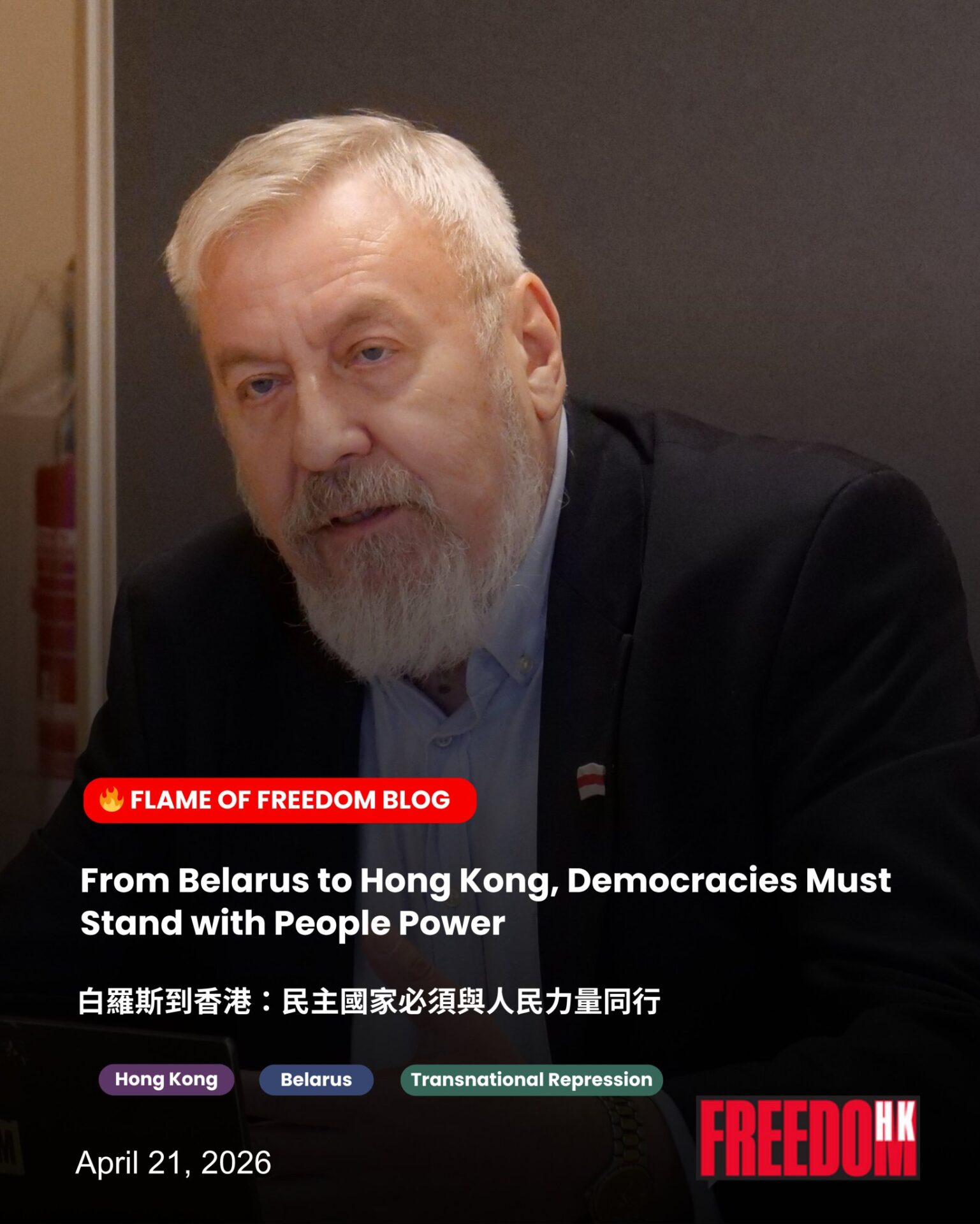
Source: The CFHK Foundation by Andrei Sannikov, WLC Ombudsperson
We are not simply witnessing a decline in democracy — we are living through its most serious crisis since the end of the Cold War. The optimism that followed the fall of the Berlin Wall in 1989 has faded into something far more dangerous: a world where authoritarianism is not retreating, but advancing with confidence.
Three decades ago, the collapse of Soviet control opened a historic window for freedom across Eastern Europe and beyond. Millions seized that moment. But many of their leaders did not. Instead of building durable democratic institutions, political elites in numerous post-Soviet states reconstructed familiar systems of control — centralized, repressive, and resistant to accountability.
The West saw this happening — and chose not to act. Rather than defending democratic principles, Western governments prioritized economic opportunity. Trade expanded, investments flowed, and markets opened. Meanwhile, democratic backsliding was tolerated, then ignored, and ultimately normalized.
This was not just a regional failure. It was a global turning point.
The post-Soviet space became a laboratory for authoritarian resurgence. Early democratic gains inspired movements worldwide, but the absence of sustained international support left these efforts vulnerable. Into that vacuum stepped major authoritarian powers such as China, Iran, and later Russia — states that did not merely resist democratic norms, but actively worked to undermine them.
Today, the results are unmistakable. According to Freedom House, global freedom declined for a 20th consecutive year in 2025. This is not a series of isolated setbacks — it is a coordinated, accelerating trend.
Authoritarian leaders have learned how to consolidate power with precision. They do not begin as dictators; they become them step by step, watching carefully for resistance at home and consequences abroad. They repress their citizens ruthlessly yet remain acutely sensitive to signals from the democratic world — because that is where their wealth, legitimacy, and access to global systems depend.
And here lies one of the central failures of our time: those signals have been weak.
Worse still, authoritarian regimes are no longer isolated. They collaborate. They share tactics, technologies, and strategies of repression. Surveillance tools pioneered in China have been deployed against protesters in Hong Kong and Belarus. Equipment manufactured in democratic countries has been used to disperse peaceful demonstrations. The very systems designed to support open societies are, in some cases, enabling their suppression.
Yet despite all this, one fact remains unchanged: people power has not disappeared.
From the streets of Minsk to the crowds in Hong Kong, from demonstrators in Iran to voters in Venezuela and activists in Uganda, millions continue to demand dignity, accountability, and freedom, in most of those cases risking their lives. These movements are not marginal — they are the clearest expression of democratic will in the modern world.
But time and again, they have been left to stand alone.
When peaceful protests are met with violence and the international response is limited to statements of concern, authoritarian leaders draw the obvious conclusion: they can act without consequence. The failure to support democratic movements does not preserve stability, as is sometimes hypocritically claimed; rather, it invites escalation. In its most extreme form, this dynamic contributes to open conflict.
The lesson is clear. Complacency is not neutrality — it is complicity.
If democratic states are serious about defending their values, they must act earlier, faster, and with greater resolve.
The recent example of Viktor Orbán’s spectacular defeat after 16-year rule in Hungary demonstrates that even in illiberal democracies, institutional mechanisms such as elections continue to exist, preserving at least the possibility that people power can re-elect or remove authoritarian-leaning leaders.
In authoritarian states, however, rulers deliberately destroy or neutralize these institutions, closing off peaceful channels of political change altogether. This means imposing real costs on authoritarian behavior in its earliest stages, not after repression has already taken hold.
For world democracies, it means aligning economic policy with political principles, rather than allowing short-term business interests to dictate long-term geopolitical outcomes. And it means offering consistent, visible, and meaningful support to those who risk their lives for democratic change.
The democratic world has leverage — economic, political, and moral. The question is not whether it has the tools, but whether it has the will to use them.
People power remains the most powerful force for change. But it cannot succeed in isolation. Without international backing, even the most courageous movements can be crushed — as was demonstrated in Hong Kong and Belarus.
The choice facing the democratic world is stark: continue down the path of passive observation, or actively defend the principles it claims to uphold. The future of global democracy may well depend on that decision.