
Source: Runrunes
The Berlin Freedom Conference brought together dissidents and human rights defenders from around the world. While Venezuela tries to move towards a political transition after the capture of Nicolás Maduro, hundreds of political prisoners remain imprisoned. The experience of the fall of the Berlin Wall serves as a reference for those seeking democratic changes in their countries.
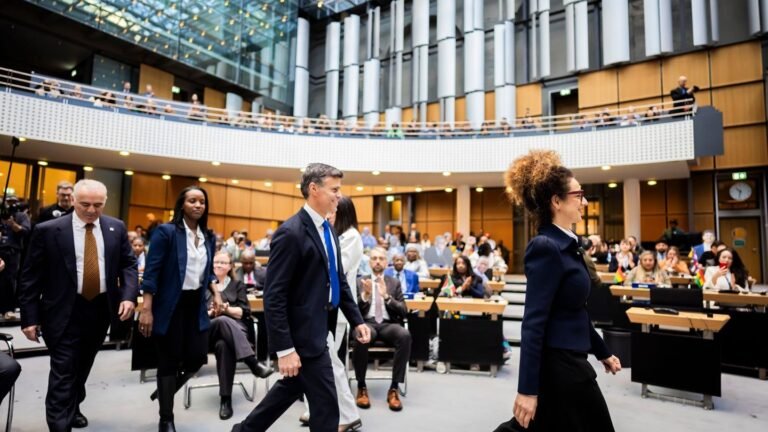
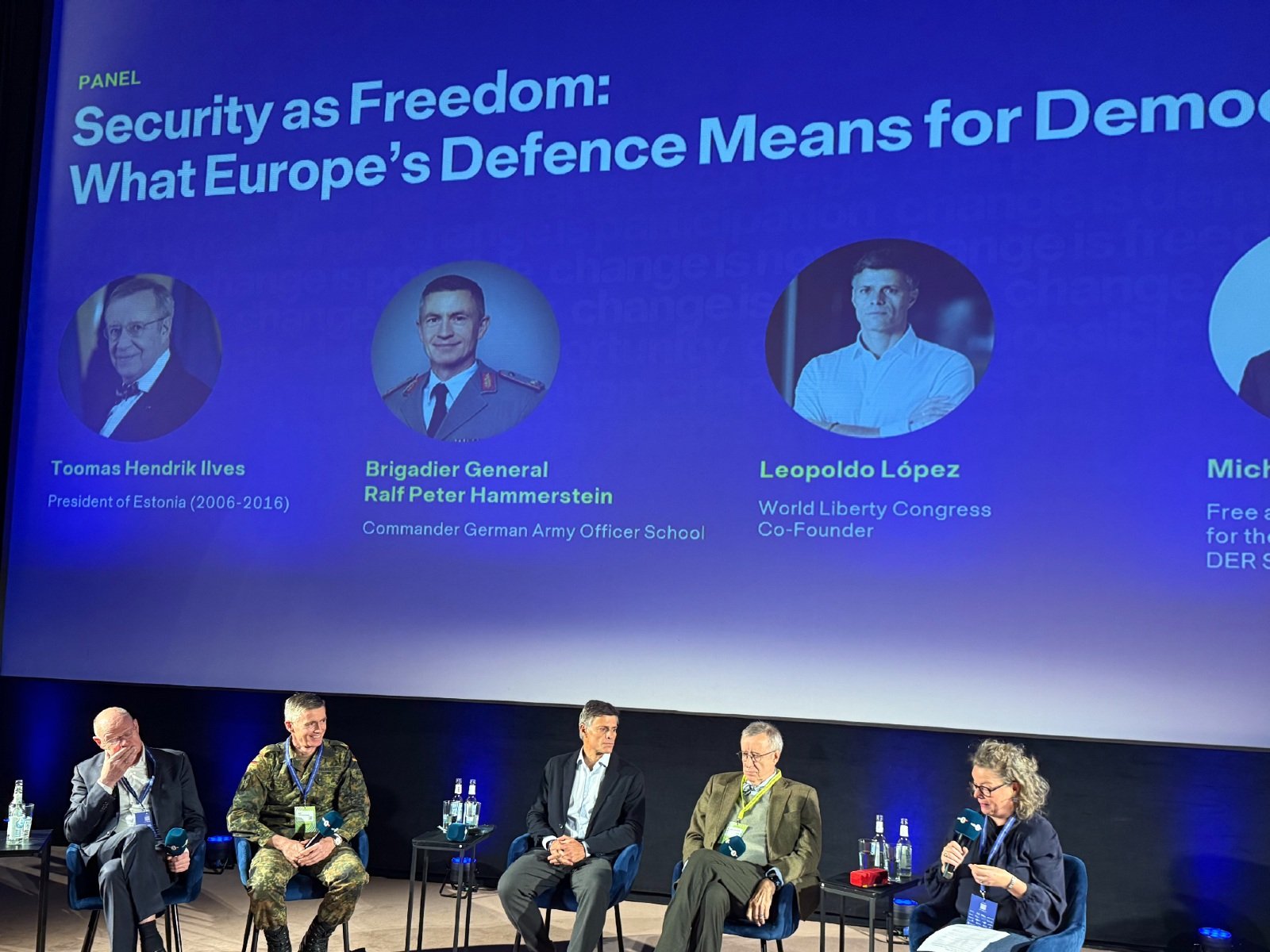
The complex situation in Venezuela was one of the topics addressed during the second edition of the Berlin Freedom Conference, held on November 10 in the German capital. The conference brings together activists, former political prisoners and opposition leaders from more than 60 countries. The various panels discussed topics ranging from the challenges of democratic transitions to international cooperation in the face of the world’s autocracies.
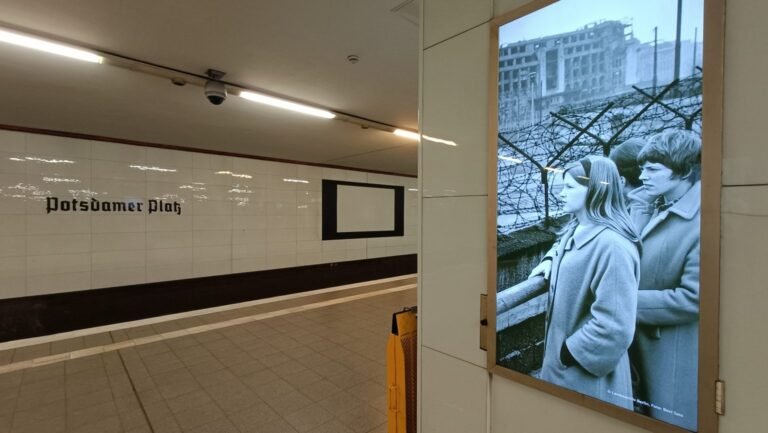
Under the slogan Change is Possible, the conference was part of the Berlin Freedom Week, an initiative that commemorates the peaceful revolution of 1989 and the fall of the Berlin Wall, one of the most emblematic events of the struggle for freedom in Europe. The conference is largely promoted by the World Liberty Congress (WLC) organization, co-founded by Leopoldo López together with Iranian activist Masih Alinejad and Russian opponent Garry Kasparov.
Political change does not guarantee democratic transformation
During the day of the Berlin Freedom Conference, relevant issues from every corner of the planet were addressed. The wars in Iran, Ukraine and the role of the United States and Russia were constant topics in most discussion panels. For Venezuelan opposition leader Leopoldo López, Venezuela’s experience demonstrates the difficulties of achieving democratic transformation, even when changes in power occur.
López recalled the numerous attempts to negotiate with Chavismo, in which different international actors participated, without achieving a political transition. “They deceived the pope, deceived the former presidents, deceived the OAS, deceived the Norwegians and remained in power,” López said during his speech in the titled panel Security as freedom: what the defense of Europe means for democracy.
Unlike those processes, López believes that the US military operation that culminated in the capture of Maduro changed the political conditions of the country. However, he recognized that this new stage poses important challenges for the Venezuelan opposition.
“There is a saying in the United States: there is no free lunch. And I think that’s especially true with Donald Trump,” López warned. Alluding to the fact that the Venezuelan future is linked to the strategic interests of Washington, a reality that forces us to find a balance between the democratic aspirations of Venezuelans and the priorities of the United States.
He also highlighted the need to reform the Venezuelan Armed Forces, which, according to his assessment, were structured to control the population rather than to defend the territory.
In that context, he said that a democratic Venezuela needs a military transition that could become a strategic ally of Western democracies, including NATO, since “if we do not carry out this transformation in coordination with the United States and NATO, and I think that is the bridge we must build, we will be at the mercy of Russia, China and terrorist organizations,” López emphasized.
Political prisoners, an outstanding debt
Despite the releases announced by the Venezuelan interim government, the situation of political prisoners remains one of the main challenges in terms of human rights.
Pedro Urruchurtu, leader of the Vente Venezuela party, led by María Corina Machado, participated in the Panel organized by the Friedrich Naumann Foundation for Freedom entitled “Displacing the leadership of power in Venezuela, Cuba and Nicaragua: adaptation, survival of regimes and search for democratic spaces.”
For Urruchurtu, these meetings make political persecution visible and connect the experiences of countries facing similar problems. “Being able to meet here and from the testimony itself talk about that is also a way to teach and show the Germans what others are suffering,” he explained.
The Venezuelan leader also stressed that the conference brings together different ideological perspectives, but allows to identify common problems, such as political persecution, transnational repression and challenges for security and democracy.
The power of political prisoners
The importance of those who remain imprisoned for facing authoritarian governments was also highlighted by Andrei Sannikov, former Vice Foreign Minister of Belarus, former presidential candidate and former political prisoner.
“Political prisoners have the power of the powerless,” Sannikov said, alluding to the resilience of those who challenge authoritarianism even from prison. But the Belarusian leader warned that this resistance needs accompaniment from abroad. “We need the power of those who care and are willing to act,” he added, underlining the importance of international solidarity and citizen mobilization to promote political change.
Sannikov recalled that he was a child when the Berlin Wall was built and was already an adult when it fell in November 1989.
“Berlin is a symbol, a city of transformations,” he said. For the political express, the fall of the Wall represented a hope for millions of citizens subjected to the communist regimes of Eastern Europe.
Europe in the face of the democratic crisis
Former Estonian Speaker Toomas Hendrik Ilves also warned during the conference about the deterioration of democracy on a global scale and the challenges facing Europe to preserve its freedoms.
In his opening speech, Ilves warned that the international democratic crisis is deeper than many imagine and raised the possibility that Europe will end up becoming one of the last bastions of democratic freedoms.
However, the former Estonian president stressed the importance of preserving electoral mechanisms as an instrument to promote political transformations. “As long as there are free elections, even if they are not fair, there will always be hope for freedom,” he said.
His reflections contrasted with the challenges of countries like Venezuela, where the discussion on the democratic transition continues linked to electoral guarantees, and the rule of law. The discussions developed demonstrate the importance of demanding elections in Venezuela in order to cement a truly democratic transition in the country.
An international alliance for freedom
The World Liberty Congress, founded in 2022, brings together more than 200 activists and defenders of democracy from more than 60 countries.Its purpose is to articulate international efforts to support those facing repression and promote democratic transitions.
“This is not a right-wing or left-wing issue,” explained López, who believes that political differences should not prevent cooperation between movements that seek to recover democratic institutions. “Ideology is a luxury when you don’t have democracy,” he said.
According to the Venezuelan opposition, the organization has contributed to the release of political prisoners, legislative initiatives and training programs for activists inside and outside their countries.
For Pedro Urruchurtu, celebrating these meetings around the anniversary of the fall of the Wall has a special meaning.
“The concept of making the Berlin Freedom Week and specifically the conference within the framework of November 9 also sends a very powerful, symbolic charge, in what freedom represents,” he said.
Thirty-seven years after the fall of the Berlin Wall, the testimonies of former political prisoners and dissidents from different continents remind us that government changes do not necessarily mean the end of repression. For Venezuela, the challenge remains to turn political transformations into concrete guarantees of freedom, justice, democratic elections and respect for human rights.
Written by: Oscar Schlenker